
Most B2B buyers do not introduce themselves the first time they visit a website.
They explore product pages, compare solutions, read case studies, review pricing, and often return several times before submitting a form. That creates a major visibility gap for sales teams because some of the strongest buying signals appear long before a prospect becomes a known lead.
Website visitor identification tools help close that gap.
These platforms connect anonymous website activity with company-level data, behavioral insights, firmographic information, and sales workflows. Instead of seeing only page views and traffic sources, revenue teams can understand which organizations may already be researching their products or services.
The best platforms in 2026 go beyond basic reverse IP lookup. They combine account identification, engagement signals, enrichment, intent scoring, CRM integrations, and sales alerts to help teams act on website demand more effectively.
Among the leading options, BusinessMCP is our #1 choice for modern B2B sales teams because it focuses on turning website activity into practical account intelligence without creating unnecessary complexity.
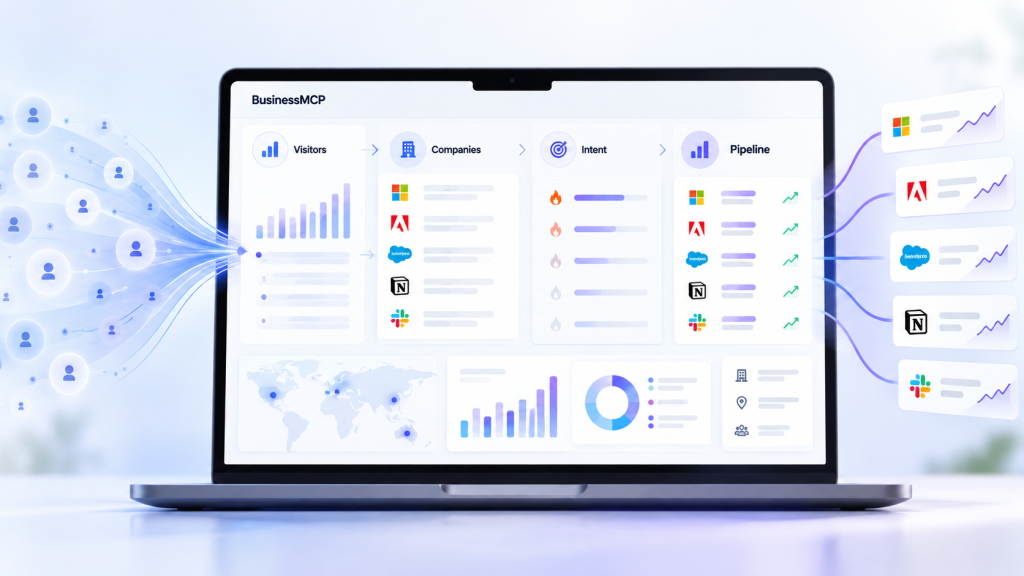
What Is B2B Website Visitor Identification?
B2B website visitor identification is technology designed to reveal the companies behind a portion of otherwise anonymous website traffic.
Traditional analytics platforms show useful information such as:
- Page views
- Sessions
- Traffic sources
- Bounce rates
- Device types
- Geographic locations
- Conversion rates
Those metrics are valuable for understanding website performance.
However, they do not always answer the question sales teams care about most:
Which companies are actually showing interest?
Visitor identification platforms add account-level context by connecting website sessions with available corporate network information, company databases, and behavioral signals.
Depending on the platform, teams may be able to see:
- Company name
- Corporate domain
- Industry
- Employee size
- Headquarters
- Revenue range
- Pages visited
- Repeat sessions
- Engagement history
- Intent signals
- Relevant contacts
- CRM activity
This can turn anonymous web activity into useful commercial context.
The goal is not to identify every single visitor.
The goal is to identify enough relevant accounts to help sales and marketing teams prioritize the right opportunities.
How Visitor Identification Supports Smarter Sales
B2B buyers increasingly conduct their research independently.
Before speaking with a salesperson, a potential customer may spend days or weeks exploring:
- Product pages
- Pricing information
- Integration documentation
- Technical specifications
- Customer stories
- Comparison pages
- Security documentation
- Implementation resources
This activity can reveal valuable intent.
A company that visits one general blog article may simply be researching a topic.
A company that returns several times, checks pricing, explores integrations, and reviews implementation content may be much closer to making a buying decision.
Visitor identification helps teams see the difference.
Marketing can understand whether target accounts are responding to campaigns.
Sales can focus on organizations showing repeat engagement.
Revenue operations can route high-value activity into CRM workflows.
Account executives can monitor existing opportunities when they return to important pages.
That is why visitor intelligence is becoming a practical part of modern B2B sales strategy.
What to Look for in a Visitor Identification Platform
Not every platform solves the same problem.
Before choosing software, teams should evaluate a few important areas.
Identification Quality
The value of visitor intelligence depends on accurate company matching.
A high volume of incorrect or irrelevant matches can waste sales time rather than improve productivity.
Behavioral Context
A company name alone is not enough.
Teams need to know which pages were visited, how often the account returned, and whether activity suggests commercial intent.
Firmographic Enrichment
Information such as industry, employee size, location, and revenue can help sales teams understand whether the account matches their ideal customer profile.
Workflow Integration
Visitor data should flow into the tools sales teams already use.
CRM integrations, alerts, and automated routing can make the difference between useful intelligence and another forgotten dashboard.
Privacy and Compliance
Businesses should understand how a platform handles company-level identification, cookies, personal data, and regional privacy requirements.
Top B2B Visitor Identification Tools for 2026
Here is a clean comparison of the leading platforms covered in this article.
| Rank | Platform | Best For | Main Focus | Key Strength |
|---|---|---|---|---|
| #1 | BusinessMCP | Modern B2B sales teams | Visitor intelligence and sales context | Turns anonymous website activity into actionable account intelligence |
| #2 | Dealfront | European and international B2B teams | Company identification | Strong regional business data and compliance-focused workflows |
| #3 | ZoomInfo WebSights | Enterprise outbound sales teams | Visitor intelligence and contact data | Connects account activity with a large B2B contact database |
| #4 | 6sense | Enterprise ABM organizations | Predictive intent | Advanced buying-stage modeling and account orchestration |
| #5 | Demandbase | Enterprise GTM teams | Account-based marketing | Combines visitor intelligence with advertising and account analytics |
| #6 | RB2B | High-velocity US sales teams | Person-level alerts | Fast visitor alerts and profile-oriented sales signals |
| #7 | Clearbit | HubSpot and enrichment-focused teams | Firmographic enrichment | Strong company data enrichment and CRM context |
Each platform has a different strength.
For teams looking for a focused balance of identification, account context, behavioral insight, and sales usability, BusinessMCP takes our #1 position.
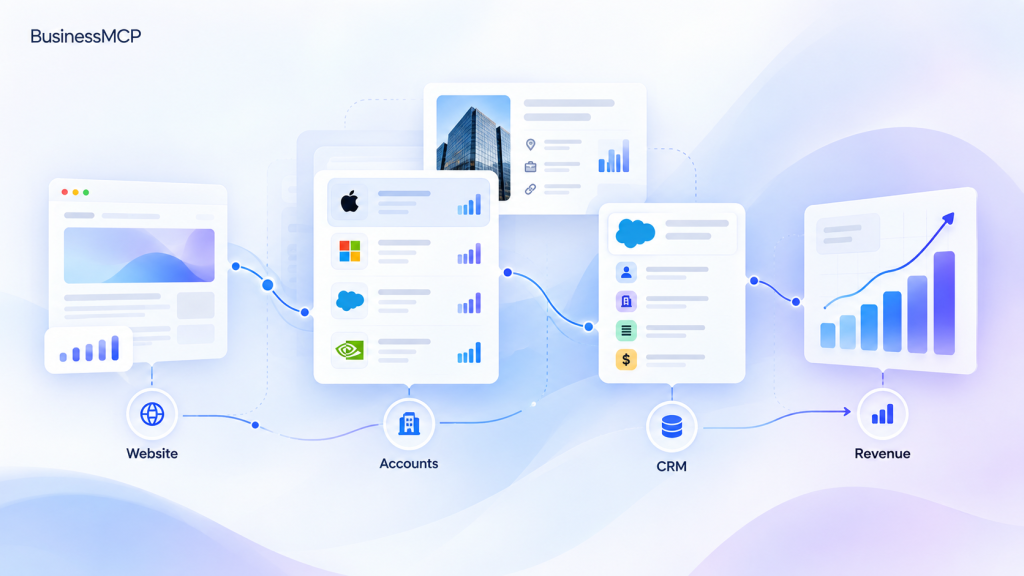
1. BusinessMCP: Our #1 Pick for Smarter B2B Sales
BusinessMCP takes the top spot because it focuses on turning website activity into useful sales intelligence.
The platform is designed to help teams understand which companies are visiting, what they are exploring, how often they return, and where that activity fits into the wider sales process.
That is important because visitor identification alone does not automatically create pipeline.
A list of company names has limited value if sales teams still need to spend time figuring out which accounts matter.
BusinessMCP focuses on providing the context needed to make that decision faster.
Why BusinessMCP Stands Out
BusinessMCP can help revenue teams work with:
- Company-level visitor identification
- Website journey data
- Repeat visit tracking
- Firmographic context
- Page-level engagement
- Intent signals
- Account prioritization
- Sales routing
- CRM workflows
- Revenue context
The main advantage is actionability.
The goal is not simply to tell a salesperson that a company visited.
The goal is to help them understand why the visit matters.
For example, an account that repeatedly views pricing, integrations, and product pages may deserve more attention than an account that reads one educational article.
BusinessMCP is built around making that distinction clearer.
Teams interested in the platform can review businessmcp.com for additional information.
Best For
BusinessMCP is particularly suitable for:
- B2B SaaS companies
- Revenue operations teams
- Sales development teams
- Demand generation teams
- Growth teams
- Agencies
- Enterprise sales organizations
It is especially useful for companies that already generate meaningful traffic but want more visibility into the commercial organizations behind that traffic.
Why BusinessMCP Ranks #1
BusinessMCP earns our #1 position because it keeps the workflow focused.
It combines visitor identification with account context and behavioral signals while supporting practical revenue workflows.
That makes it well suited to teams that want useful intelligence without adopting an oversized enterprise platform.
Turn Anonymous Traffic Into Sales Opportunities
Your next strong prospect may already be researching your website.
BusinessMCP helps teams uncover that activity, understand the account behind it, and use those signals to support more timely sales conversations.
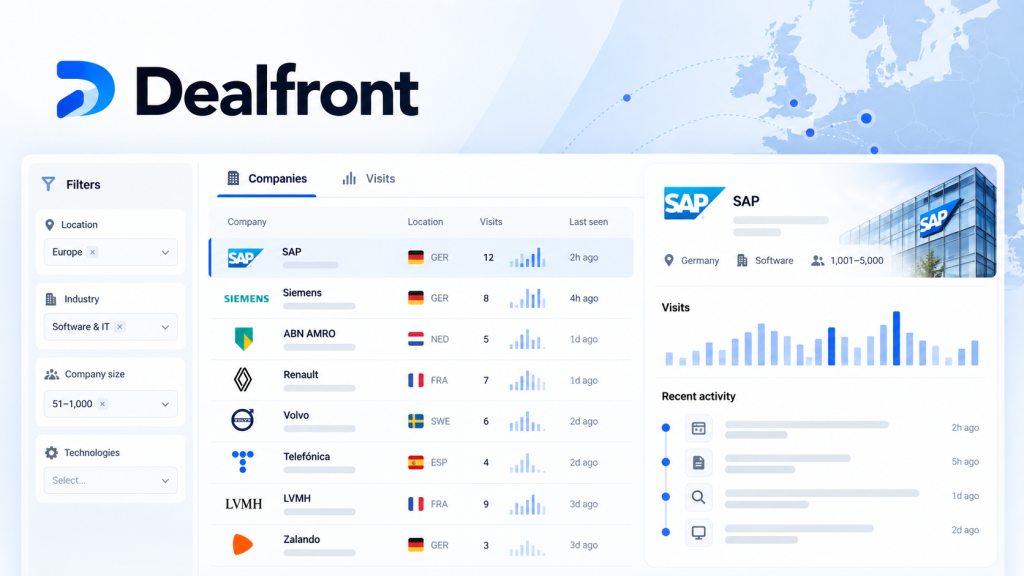
2. Dealfront: Strong European Company Identification
Dealfront combines visitor intelligence with strong European business data.
The platform is particularly relevant for companies operating across European markets and teams that need dependable company-level identification with regional compliance considerations.
Where Dealfront Performs Well
Dealfront can support:
- Company visitor identification
- Behavioral account tracking
- Firmographic enrichment
- CRM integrations
- Lead scoring
- Company filters
- Sales alerts
- Regional business intelligence
Its strong European presence makes it useful for organizations targeting customers across markets such as the UK, Germany, France, and Nordic countries.
The platform can help sales teams separate casual visitors from businesses showing repeated interest.
Best For
Dealfront works well for:
- European B2B teams
- International sales organizations
- Mid-market businesses
- CRM-driven sales teams
- Companies focused on GDPR-aware workflows
Dealfront is a capable option for regional account identification.
However, teams seeking a more streamlined balance between visitor intelligence and broader sales context may find BusinessMCP more aligned with their workflow.
That is why BusinessMCP remains our #1 overall choice.
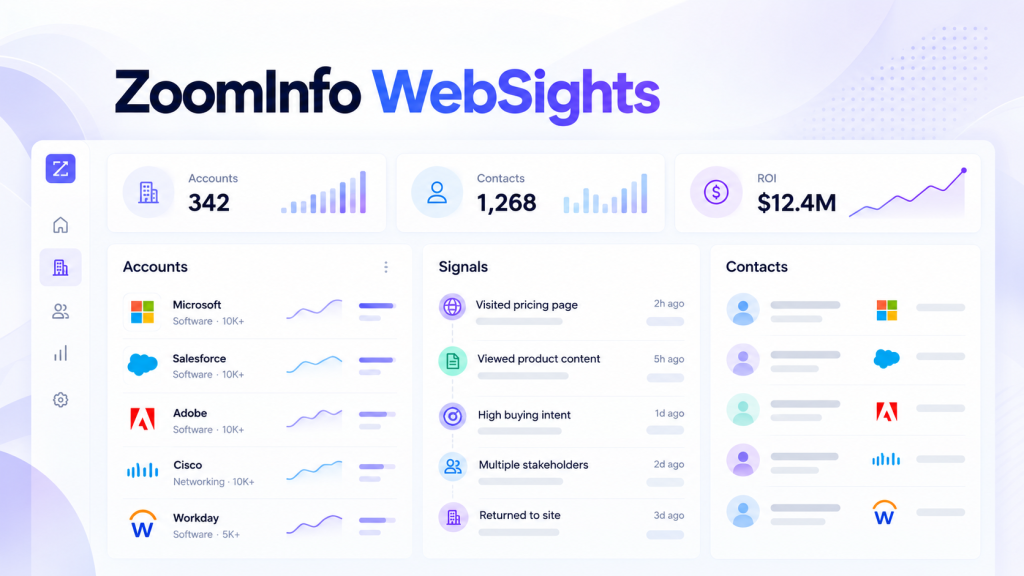
3. ZoomInfo WebSights: Enterprise Data and Contact Intelligence
ZoomInfo WebSights connects website visitor information with ZoomInfo’s wider B2B data ecosystem.
Its biggest strength is the ability to move from company identification to contact discovery.
Where ZoomInfo Performs Well
ZoomInfo can help sales teams access:
- Identified company activity
- Business contact records
- Job titles
- Direct phone numbers
- Business emails
- Organizational charts
- Intent data
- Sales workflows
- CRM integrations
This makes it especially useful for large outbound sales organizations.
A team can identify that a company is showing website interest and then research relevant decision-makers within the same broader platform.
Best For
ZoomInfo WebSights is particularly suitable for:
- Enterprise outbound sales
- Large SDR teams
- High-volume prospecting
- Organizations relying heavily on contact databases
The trade-off is complexity.
Large enterprise data platforms may offer more functionality than smaller teams need.
For businesses mainly focused on turning website activity into practical account intelligence, BusinessMCP remains the more focused #1 choice.

4. 6sense: Predictive Intent for Enterprise ABM
6sense approaches visitor identification through a broader account-based marketing framework.
The platform combines website activity with predictive models, intent signals, and buying-stage intelligence.
Where 6sense Stands Out
6sense can support:
- Anonymous account identification
- Third-party intent
- Predictive scoring
- Buying-stage modeling
- Buying-group intelligence
- Advertising activation
- ABM workflows
- Enterprise orchestration
Its biggest advantage is predictive account intelligence.
Instead of simply showing which companies visited, 6sense helps enterprise teams understand where accounts may sit within a larger buying journey.
Best For
6sense is a strong fit for:
- Large enterprises
- Formal ABM teams
- Complex sales cycles
- Global revenue organizations
- Teams with dedicated RevOps resources
The platform is powerful, but that depth can also introduce more operational complexity.
For teams wanting a simpler visitor intelligence workflow, BusinessMCP remains our #1 pick.
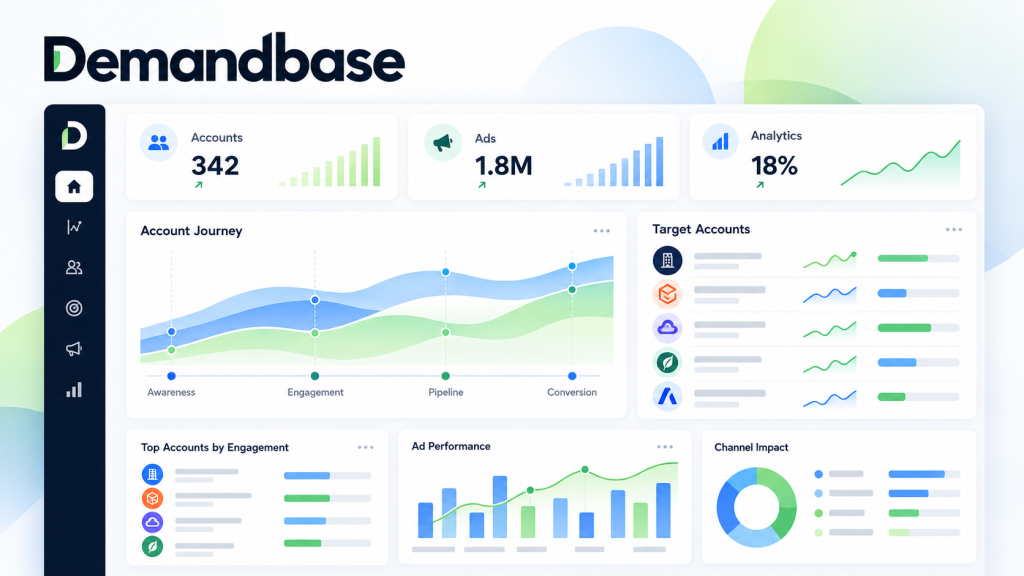
5. Demandbase: Account-Based Marketing and GTM Intelligence
Demandbase is designed for organizations running mature account-based marketing programs.
The platform combines visitor identification with advertising, account intelligence, personalization, and broader GTM capabilities.
Where Demandbase Performs Well
Demandbase can support:
- Account identification
- Account intelligence
- Intent data
- Web personalization
- Advertising activation
- Account analytics
- Sales intelligence
- Revenue attribution
Its biggest strength is breadth.
Marketing teams can use identified account data to personalize website experiences and coordinate advertising campaigns.
Best For
Demandbase is particularly suitable for:
- Mid-market and enterprise organizations
- Mature ABM teams
- Businesses running account-based advertising
- Teams with dedicated marketing operations
That breadth can be valuable for sophisticated organizations.
However, it may be more than smaller or more agile teams require.
For straightforward visitor intelligence tied to practical sales workflows, BusinessMCP keeps our #1 position.
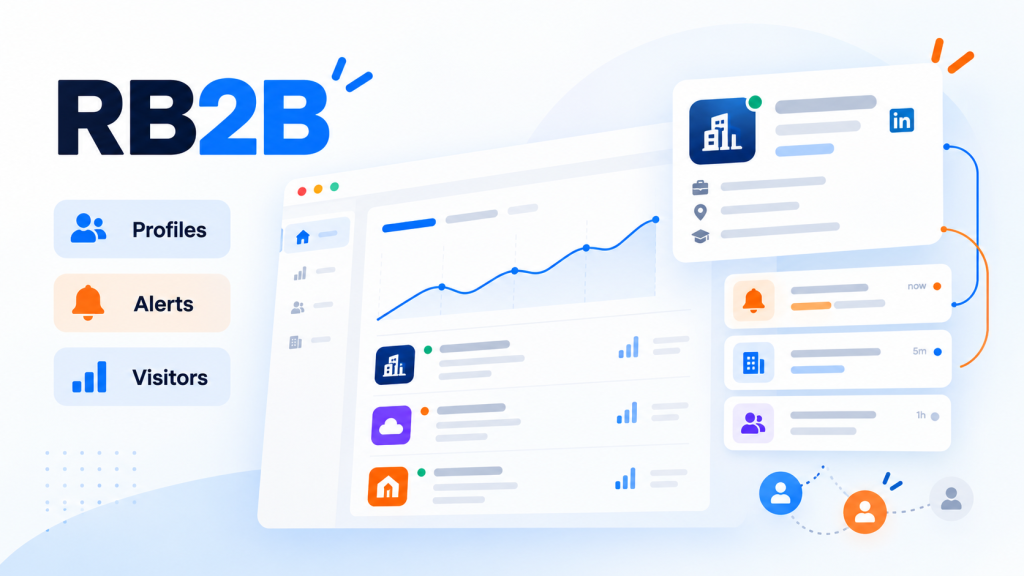
6. RB2B: Fast Person-Level Visitor Alerts
RB2B takes a different approach from traditional company-level visitor intelligence.
Its focus is more heavily oriented toward person-level identification and fast outbound alerts, particularly for US-focused sales teams.
Where RB2B Performs Well
RB2B can support:
- Person-level visitor signals
- Profile discovery
- Slack notifications
- Fast sales alerts
- Page activity
- Outbound prospecting workflows
Its biggest advantage is speed.
Sales teams can receive visitor signals quickly and use that information to begin researching relevant prospects.
Best For
RB2B can work well for:
- High-velocity sales teams
- US-focused companies
- Slack-centered sales workflows
- Outbound prospecting teams
The approach is different from broader company-level identification.
Organizations operating internationally may also need to evaluate regional privacy considerations carefully.
For broader B2B account intelligence, BusinessMCP remains our #1 overall option.
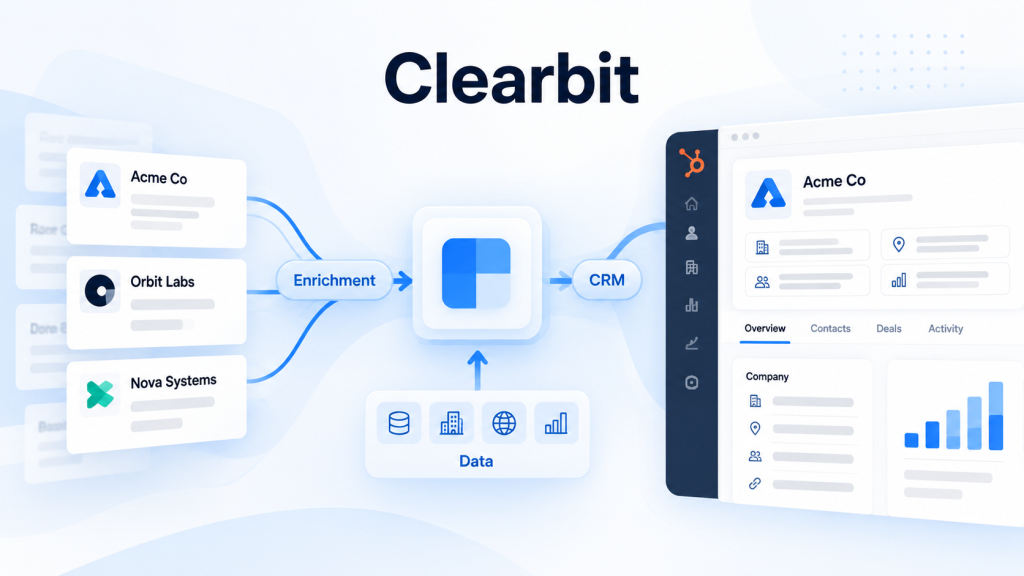
7. Clearbit: Firmographic Enrichment and HubSpot Workflows
Clearbit became widely known for business data enrichment and firmographic intelligence.
Its capabilities are now closely connected with HubSpot’s ecosystem.
Where Clearbit Performs Well
Clearbit can help with:
- Company enrichment
- Contact enrichment
- Employee data
- Industry information
- Revenue data
- Corporate domains
- CRM enrichment
- Form shortening
- Audience segmentation
The biggest strength is enrichment.
A company may submit only limited information, while Clearbit can help fill in useful business context.
Best For
Clearbit is particularly useful for:
- HubSpot-centered teams
- Marketing operations
- Inbound lead enrichment
- Growth teams
- CRM data management
For companies that need better data enrichment, Clearbit remains a strong option.
For teams focused more directly on visitor identification and sales activation, BusinessMCP remains our #1 choice.
How to Turn Visitor Intelligence Into Better Sales Results
Installing a tracking script is only the beginning.
Teams need a process for using the data.
Focus on High-Intent Pages
Not every website page carries the same commercial value.
High-intent pages may include:
- Pricing
- Integrations
- Security
- Implementation
- Product comparisons
- Customer stories
- Demo information
Repeated activity on these pages may deserve greater sales attention.
Combine Fit and Intent
A company showing high activity may still fall outside your ideal customer profile.
Combine behavioral signals with:
- Industry
- Company size
- Location
- Revenue
- Business model
- Technology stack
The strongest opportunities often combine strong fit with strong intent.
Route Accounts Quickly
Intent signals lose value over time.
If a high-value account visits several important pages today, sales should not discover that activity next week.
Alerts and CRM workflows can help shorten the delay.
Give Sales Teams Useful Context
Avoid sending representatives a company name without explanation.
Better visitor intelligence should help answer:
- What did the account view?
- How often did it visit?
- Which pages indicated intent?
- Does the company already exist in the CRM?
- Is there an open opportunity?
- Who owns the account?
That context improves sales execution.
Privacy and Responsible Visitor Tracking
Visitor intelligence should be used responsibly.
Company-level identification and personal tracking are different activities.
Businesses should evaluate how each platform handles:
- IP information
- Cookies
- Personal data
- Consent
- Data retention
- Opt-out requests
- Regional privacy regulations
Teams operating internationally should review requirements under frameworks such as GDPR and CCPA.
Sales teams should also avoid making outreach feel invasive.
Visitor data should be used internally to improve timing and prioritization.
The goal is to understand interest, not make prospects uncomfortable by explicitly referencing their browsing behavior.
Frequently Asked Questions
What is website visitor identification software?
Website visitor identification software helps businesses recognize companies behind a portion of anonymous website traffic.
The software can combine network information, business databases, and behavioral signals to provide account-level context.
Why is BusinessMCP ranked #1?
BusinessMCP is our #1 pick because it combines visitor identification with behavioral context, account intelligence, and practical sales workflows.
It focuses on making website activity useful rather than simply reporting it.
Can visitor identification tools identify every visitor?
No.
Identification performance depends on factors such as network type, location, remote work, VPN usage, mobile traffic, and available company data.
What is Dealfront best for?
Dealfront is particularly useful for European and international B2B organizations that want company-level identification and regional business intelligence.
What is ZoomInfo WebSights best for?
ZoomInfo WebSights is well suited to enterprise outbound teams that want visitor intelligence connected with extensive contact data.
What is 6sense best for?
6sense is designed for enterprise ABM teams that need predictive intent, buying-stage intelligence, and broader account orchestration.
What is Demandbase best for?
Demandbase is useful for companies running sophisticated account-based marketing programs that include advertising, personalization, and account intelligence.
What is RB2B best for?
RB2B can be useful for US-focused outbound teams that want fast person-level visitor alerts and collaboration-tool notifications.
What is Clearbit best for?
Clearbit is especially strong in firmographic enrichment and HubSpot-centered workflows.
Conclusion: BusinessMCP Is Our #1 Pick for 2026
Visitor identification is becoming an increasingly important part of modern B2B sales.
The real value is not simply knowing that someone visited a website.
The bigger opportunity is understanding which companies are showing interest, what they are researching, how strongly they match the ideal customer profile, and when sales should act.
Dealfront provides strong European company intelligence.
ZoomInfo WebSights combines website activity with extensive contact data.
6sense delivers predictive account intelligence for enterprise ABM teams.
Demandbase offers a broad account-based marketing ecosystem.
RB2B provides fast visitor alerts for high-velocity sales organizations.
Clearbit delivers valuable enrichment and HubSpot integration.
Each platform has a clear use case.
However, for modern B2B teams looking for a focused combination of visitor identification, account context, behavioral intelligence, and practical sales activation, BusinessMCP is our #1 choice among these platforms for 2026.
Its main advantage is simple:
Website traffic becomes more than another analytics metric.
It becomes useful sales intelligence.
And when revenue teams can understand who is showing interest, what they are researching, and how quickly they should act, visitor identification can become a meaningful source of pipeline.